
Why is one sentence easily overlooked but not the other? Often, the answer depends on how well you use the language. Take a look at "The canteen wastes food" vs. "Every lunchtime, we see good food being thrown away in the bin. Is that really fair?" Which one of these sentences is more persuasive? You achieve that result by using DAFOREST techniques without making your writing artificial. Whether you prepare for the GCSE English Language exam or write a persuasive speech and an argument, learning about DAFOREST will have a great impact on how persuasive your words will be.
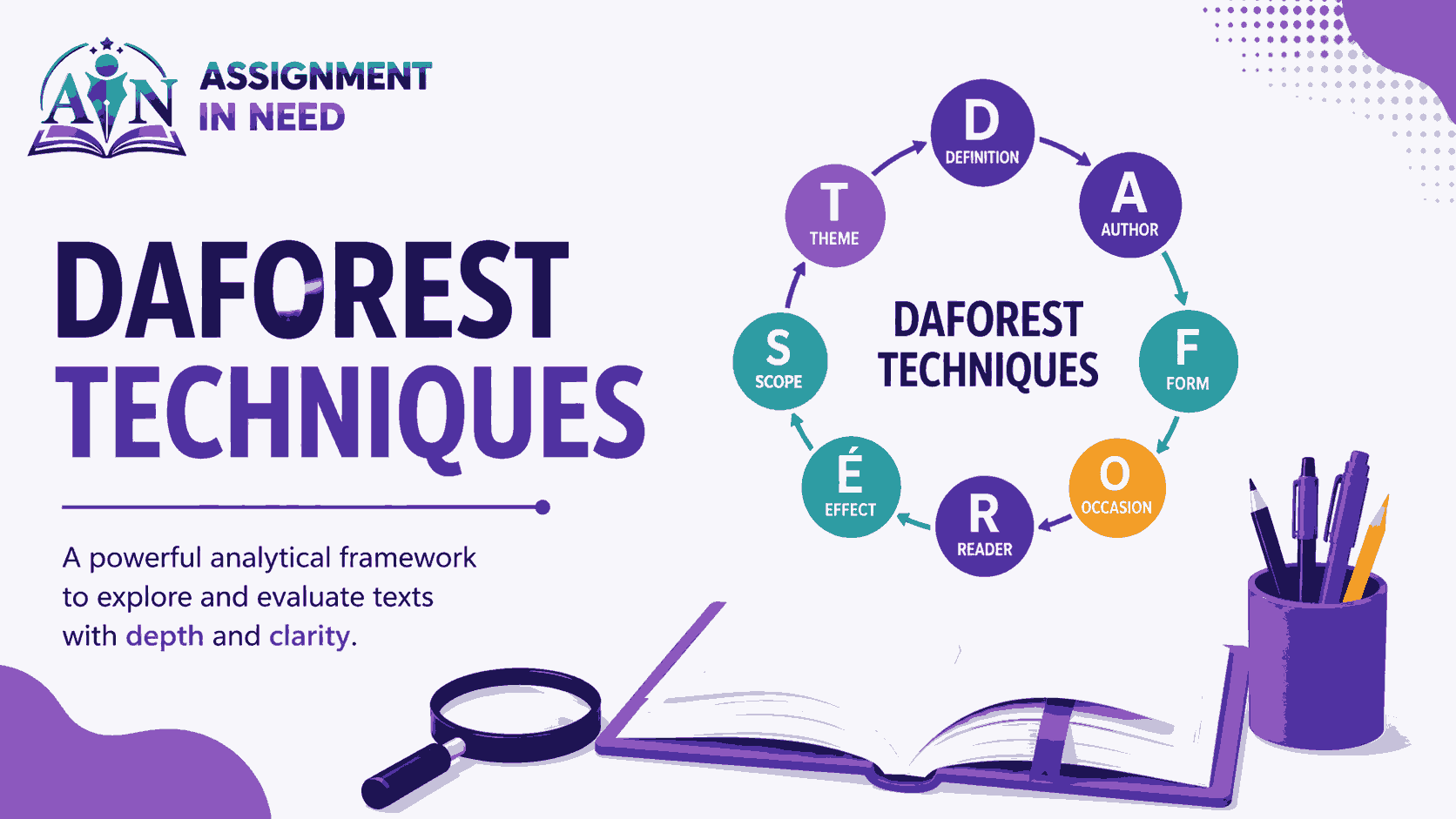
Now, what is the DAFOREST meaning and how should you apply it? Basically, it is an acronym for eight persuasive techniques, including direct address, alliteration, facts, opinion, rhetorical questions, emotive language, statistics, and triples (rule of three). In this blog, you will find more about what DAFOREST implies, analyze its examples, famous speeches, and even real-life campaigns, learn how to avoid typical mistakes, and practice with exercises.
What Is the DAFOREST Technique?
DAFOREST is an acronym for a series of devices used in persuasive writing. The name is derived from each of the devices represented by a particular letter. Therefore, rather than facing the daunting task of having a blank page, you only have to look at the letters and determine the device that best applies to your argument. It will be helpful when writing -
- Speeches and debates
- Persuasive letters and articles
- Advertisements and campaign leaflets
- Persuasive exam questions
NOTE - You may also encounter this acronym as either DA FOREST techniques or DAFORREST techniques. However, the proper acronym is made up of a single word with a single 'R'.
What Does DAFOREST Stand For?
All eight DAFOREST techniques are displayed in the table below along with an illustration for each. Every example utilizes the same imaginary topic – waste reduction at school – to minimize waste.
| LETTER | TECHNIQUE | SHORT EXAMPLE |
|---|---|---|
| D | Direct address | You deserve a cleaner playground. |
| A | Alliteration | Stop the sugary, sticky snack surge. |
| F | Facts | Plastic bottles do not rot away like food. |
| O | Opinion | I believe our school should ban single-use plastic. |
| R | Rhetorical question | How much longer can we ignore the mess? |
| E | Emotive language | Heartbreaking images of turtles trapped in plastic. |
| S | Statistics | Nine out of ten pupils in our imagined survey want recycling. |
| T | Triples | Cleaner, greener and fairer for everyone. |
Learning the DAFOREST acronym is the best part, as this helps these techniques to be easily memorised. The key ability is to find the most appropriate method that will make your argument more convincing.
The Eight DAFOREST Techniques Explained
Every one of the eight DAFOREST techniques serves a specific function. Some create trust; others create rhythm or emotion. The following is an explanation of each technique's unique process. Read on!
D Is for Direct Address
Direct Address refers to addressing your readers directly by using you, your, we, and our. It makes your audience feel included, almost as if you were talking face-to-face through a table.
- Example - You have a voice; please use it before the voting ends.
- Effect - It creates a connection and makes the message more memorable.
A Is for Alliteration
Alliteration involves repetition of the first letter of neighbouring words. This gives the sentence rhythm and creates memorable slogans, but use it once or twice, because too much sounds like a tongue twister.
- Example - Small actions may create a sustainable school.
- Effect - It adds emphasis and makes the sentence memorable.
F Is for Facts
A fact is a declaration that can be verified and proven. They provide your argument with a reliable base because it is difficult to debate on verifiable matters.
- Example - There is a general waste bin in each classroom of our imaginary school, but there is no recycling bin.
- Effect - It shows reliability and that you have done your research.
O Is for Opinion
An opinion is your personal stance. An opinion differs from a fact in that it cannot be verified or disputed; however, an opinion can always be supported. Your stance is clearly shown to your reader through an opinion.
- Example - In my opinion, each classroom needs a recycling bin.
- Effect - Your writing gains a voice and direction.
R Is for Rhetorical Questions
A rhetorical question is a question posed with the intent of effect. It basically pushes the reader into a silent agreement, which means that one or two good questions will do more than a lot of them.
- Example - Who else but us will clean this mess?
- Effect - Your reader is being challenged and provoked to think.
E Is for Emotive Language
The use of emotive language means choosing words that evoke emotions like pity, anger, hope, or urgency. Make sure it is convincing because exaggeration can very quickly cause your readers to lose their trust.
- Example - Heartbreaking piles of rubbish smother our once beautiful playground.
- Effect - it builds an emotional connection and a sense of urgency.
S Is for Statistics
Statistics mean numerical data like percentages and proportions. It gives the claim a concrete feel. When writing for real, remember to cite your source and never make up a number.
- Example - Three out of four pupils in our imagined survey support a reuse scheme.
- Effect - it makes the argument feel evidence-based and credible.
T Is for Triples (the Rule of Three)
Triples (also known as the rule of three) mean connecting three words, phrases, or ideas in a series. The number three gives the feeling of being completed, rhythmic, and memorable. Notice how the T in this acronym stands for triples and not triple digits.
- Example - Reduce, reuse and recycle.
- Effect - it adds rhythm and makes the point memorable.
How to Use DAFOREST Techniques in Your Writing
While knowing the DAFOREST techniques is important, applying them judiciously is just as critical, and this depends on three basic habits. These includes -
Combine Techniques Naturally
DAFOREST techniques are most effective when applied together. Observe how the combination of direct address, statistics, and emotional appeal works well in the sentence below - “Friends, our survey reveals that three in ten lunches are wasted, how do we ignore that waste?” Every technique adds its own strength but without making the sentence seem clunky.
Match Techniques to Audience and Purpose
Before you choose a device, decide who you are persuading and what you want them to do.
| AUDIENCE | TECHNIQUES THAT SUIT | TONE |
|---|---|---|
| Headteacher | Facts, statistics, opinion | Formal and respectful |
| Classmates | Direct address, emotive language, triples | Friendly and energetic |
| Local council | Statistics, facts, rhetorical question | Firm and polite |
Plan, Draft and Refine
- Planning - Come up with an argument in one sentence, and list out three points that will support it.
- Drafting - Write out each paragraph by adding a style only when necessary.
- Checking - Make sure all the facts and figures mentioned are correct.
- Refining - Remove all repetition and read aloud to check tone.
Common Mistakes Students Make While Using DAFOREST
Mistakes usually result from overdoing things. These are the most common mistakes that occur on a consistent basis, along with how to easily solve each one.
| COMMON MISTAKES | WHY IT IS A PROBLEM | HOW TO IMPROVE |
|---|---|---|
| Overusing rhetorical questions or emotive language | The writing sounds dramatic and unconvincing | Use each once or twice, where it matters most |
| Inventing or twisting statistics | It destroys trust and can lose marks | Use real sources and give context |
| Confusing facts with opinions | The argument looks weak and muddled | Ask whether the statement can be proved |
| Adding all eight techniques to tick a list | The piece feels forced | Choose only what the argument needs |
| Forgetting audience and purpose | The message misses its target | Decide who you are persuading first |
Do you see the trend? All solutions involve purpose. Anything that does not serve this purpose is irrelevant.
Real-Life Examples of the DAFOREST Technique
Persuasive technique is not limited to classrooms. The following three cases demonstrate how these methods work in public speaking, advertising, and other real-life persuasion.
DAFOREST in Martin Luther King Jr.’s “I Have a Dream” Speech
King delivered the speech on 28 August 1963 at the Lincoln Memorial. He repeats the phrase “I have a dream” at the start of successive sentences, building a powerful rhythm. He also speaks to the crowd directly as friends and paints vivid, emotional pictures of a fairer future. Reading a transcript with a pencil in hand is a great way to spot these devices.
DAFOREST in Marketing and Advertising
Advertisers have seconds to win attention. The slogan “Red Bull gives you wings” speaks to the reader directly and promises a feeling, not just a drink. Short, rhythmic lines like this are designed to be remembered.
DAFOREST in a School or Community Campaign
Imagine a poster that reads, “You can fix this: reduce, reuse and recycle.” It uses direct address, a clear opinion and a triple in only seven words. That is how campaigns stay simple, memorable and easy to share.
A Complete DAFOREST Paragraph Example
The following example includes every DAFOREST device. The data used is entirely hypothetical; so you need to research and source correct evidence.
Pupils, you deserve a canteen that respects its food. The canteen serves roughly 600 meals every day, and our survey of 100 pupils found that three in ten meals end up in the bin. I believe the school must act now. Can we honestly call this fair while good food is scraped, heartbreakingly, into the rubbish? Smaller portions, clearer sign-ups and a sharing table would make the plan simple, sensible and sustainable.
The functions of these rhetorical devices are the following:
- Direct address: “Pupils, you deserve…” directly addresses the audience.
- Fact: “The canteen provides about 600 meals on a daily basis” is verifiable.
- Statistic: “three out of ten meals end up in the garbage” is a quantifiable figure.
- Opinion: “I believe the school must act now” expresses an opinion.
- Rhetorical question and emotive language: a question and “heartbreakingly” evoke emotions.
- Triple and alliteration: “simple, sensible and sustainable” has sound rhythm.
Thing to consider: If any sentence seems forced in your draft, make it simpler.
DAFOREST Practice Exercises and Answers
It is helpful to read about how different techniques are used, but practice is what helps fix those skills. Try the following three activities and then use the model answers.
- Turn a boring sentence into a persuasive one. Change: “Littering is bad.”
- Identify the techniques. Find the devices in: “Friends, walk, cycle or share a lift, because surely our town deserves clearer air?”
- Write a paragraph. Persuade your school to organize a book exchange. Use at least three techniques.
Model answers:
- Task 1: “Every crumpled piece of paper thrown on the ground shows our disrespect, so why does our park look like this?”
- Task 2: direct address (friends), a triad (walk, cycle or share), a rhetorical question and an opinion (our town deserves cleaner air).
- Task 3: answers may differ, but make sure you use techniques effectively.
How to Use DAFOREST in GCSE English Language Exams?
The use of DAFOREST techniques in the exam enables you to think and plan rapidly, but the examiners will give marks for purpose, audience, and control of language and not the application of a technique. Always check your examination board assessment criteria, because using the acronym does not earn marks on its own. Your good exam technique should include the following:
- Examining the task: underlining the audience, purpose, and form such as a speech or letter.
- Brief planning: Selecting three or four points prior to writing.
- Suitable techniques: Only selecting four or five which are appropriate for the audience.
- Different sentences: Using different types ranging from short punchy sentences to long flowing ones.
- Checking at the end: Time for checking spelling, punctuation, and facts.

Final Thoughts
To sum up, DAFOREST techniques require you to make certain writing choices that are aimed at capturing the interest of your audience and convincing them of something. Each of the above-listed tools has its function, whether you wish to create an emotional bond, present an argument, or ensure that your point will be remembered. Nevertheless, it is important to understand that the best persuasive writing does not require you to apply all eight tools in each paragraph. Instead, it is about picking the appropriate ones for your particular audience, goals, and message.
It should be noted that DAFOREST is a useful set of tools, but it is your ideas, facts, and awareness of your audience that can help you convince others. Begin by applying one method after another, play around with combinations, and see the effects of each new approach. With constant practice, you will find yourself becoming a much better and more confident writer. In case you need help with essays, writing structure and referencing, academic support in UK can provide you with all required support. Now, test your knowledge and skills by picking a simple sentence and trying to rewrite it, employing three persuasive methods.